





Well-known man of fashion contests the blue business shirt
"Danish men should be bolder," believes David Krarup. From his specialist menswear shop in Copenhagen, he encourages men to swap the blue uniform for colours. It's an uphill battle.

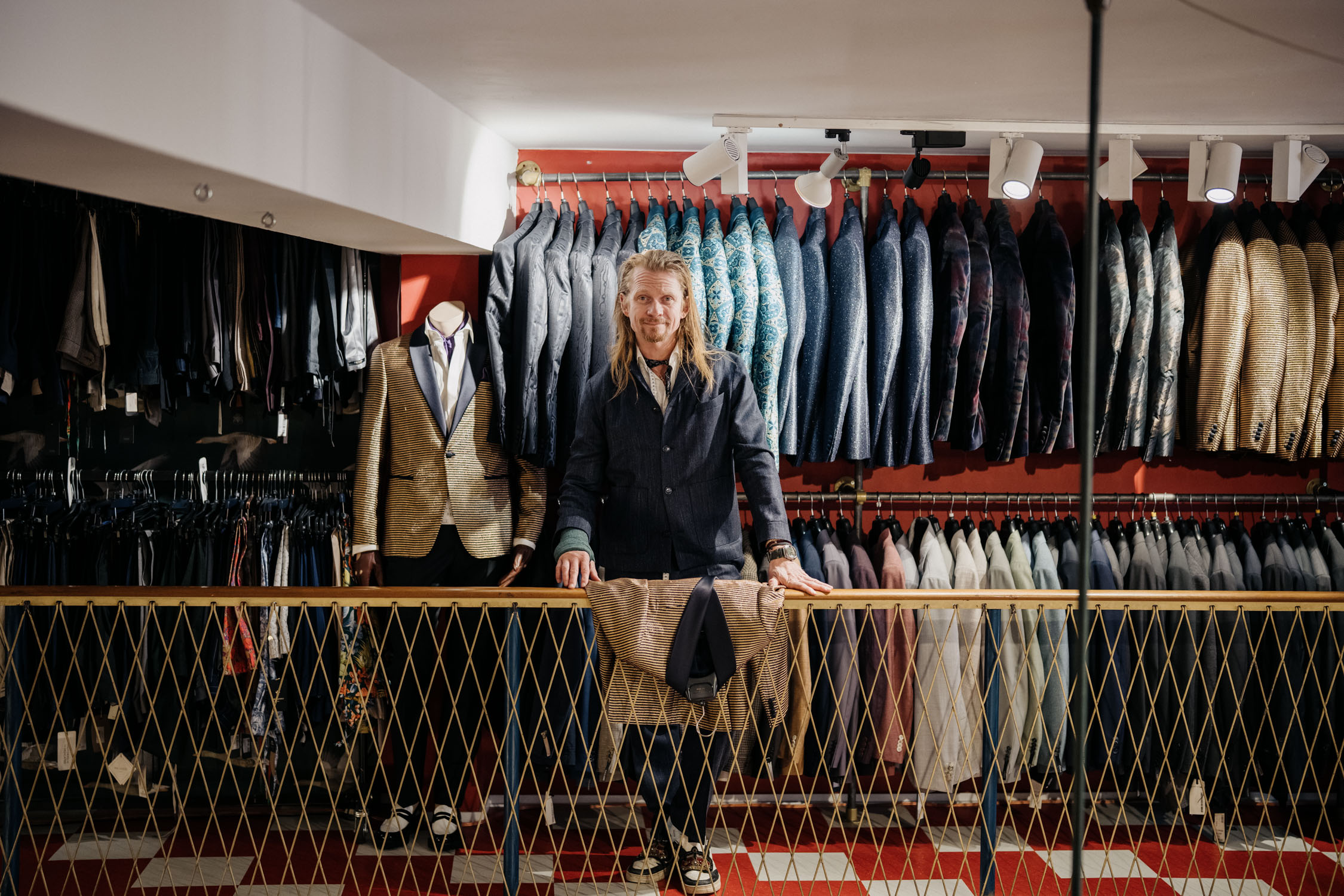
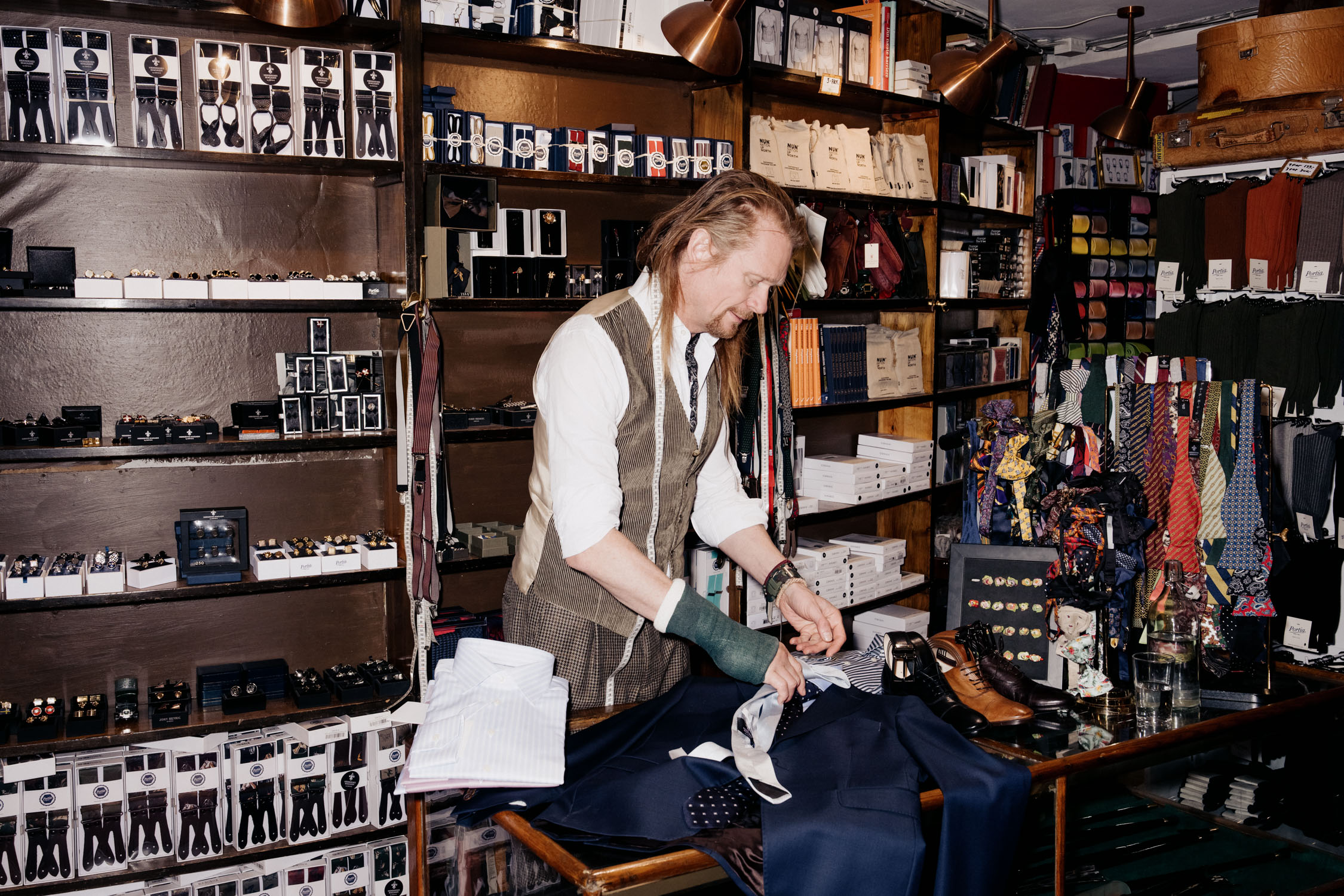
The shop itself is a study in style: from the busy street, three narrow, two‑storey‑high windows display mannequins in not‑so‑business‑like suits, and the moment you step inside, you’re transported to Savile Row in London.
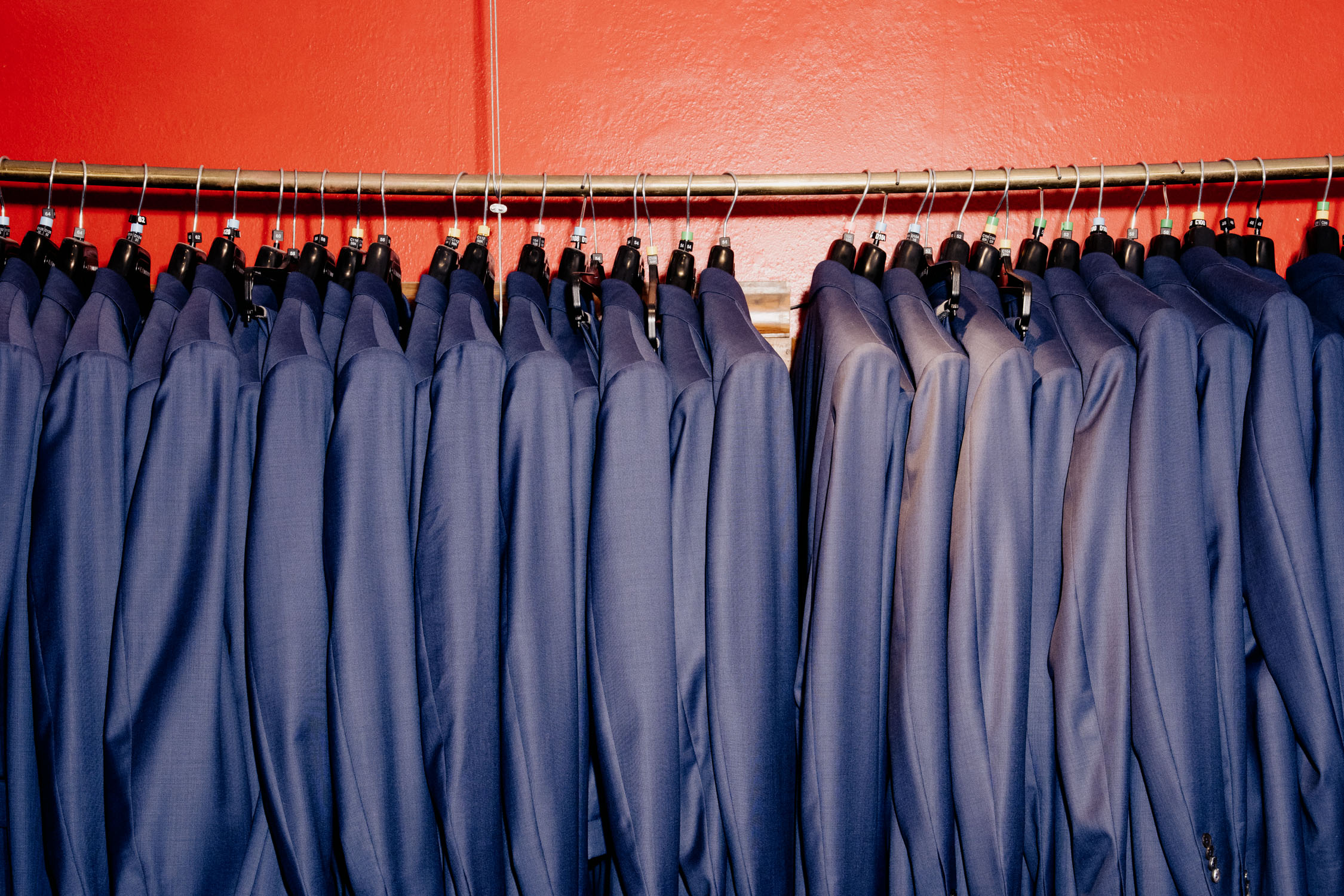
All along the wall, a few hundred suits hang, arranged by colour.
On the floor are racks of Italian cardigans, vintage wooden glass cases with accessories, metres of shelves displaying cufflinks, suspenders, stockings and underwear as well as racks of self-tie bow ties and fashionable scarves.
Right in the middle are two slightly worn, brown leather armchairs with wings, a couple of small tables and a matching sofa on top of an old rug. The shop extends from the ground floor up to the first, where a spiral staircase, in the same well-worn style as the furniture, leads to a gallery spanning the entire shop. And up here: more suits. A chandelier hangs from the ceiling – right next to a bicycle.
In short, a place of business mixing the style, atmosphere and charm that an above-average menswear shop should have.

“Terribly impractical”
But why do the pen-pushers appear to prefer dark suits with blue or white shirts when there are so many beautiful and exquisite clothes to wear?
“I think we need to go back to the time of uniforms. Not to explain the blue, but to explain the white. That's where it started. The finest shirts were white, and that whole world laid the groundwork for what we see today," he says.
The colour blue has since become a kind of compromise between the formal and the practical – or at least what is thought to be practical. Because actually, the blue shirt is a pretty bad choice to wear for work.
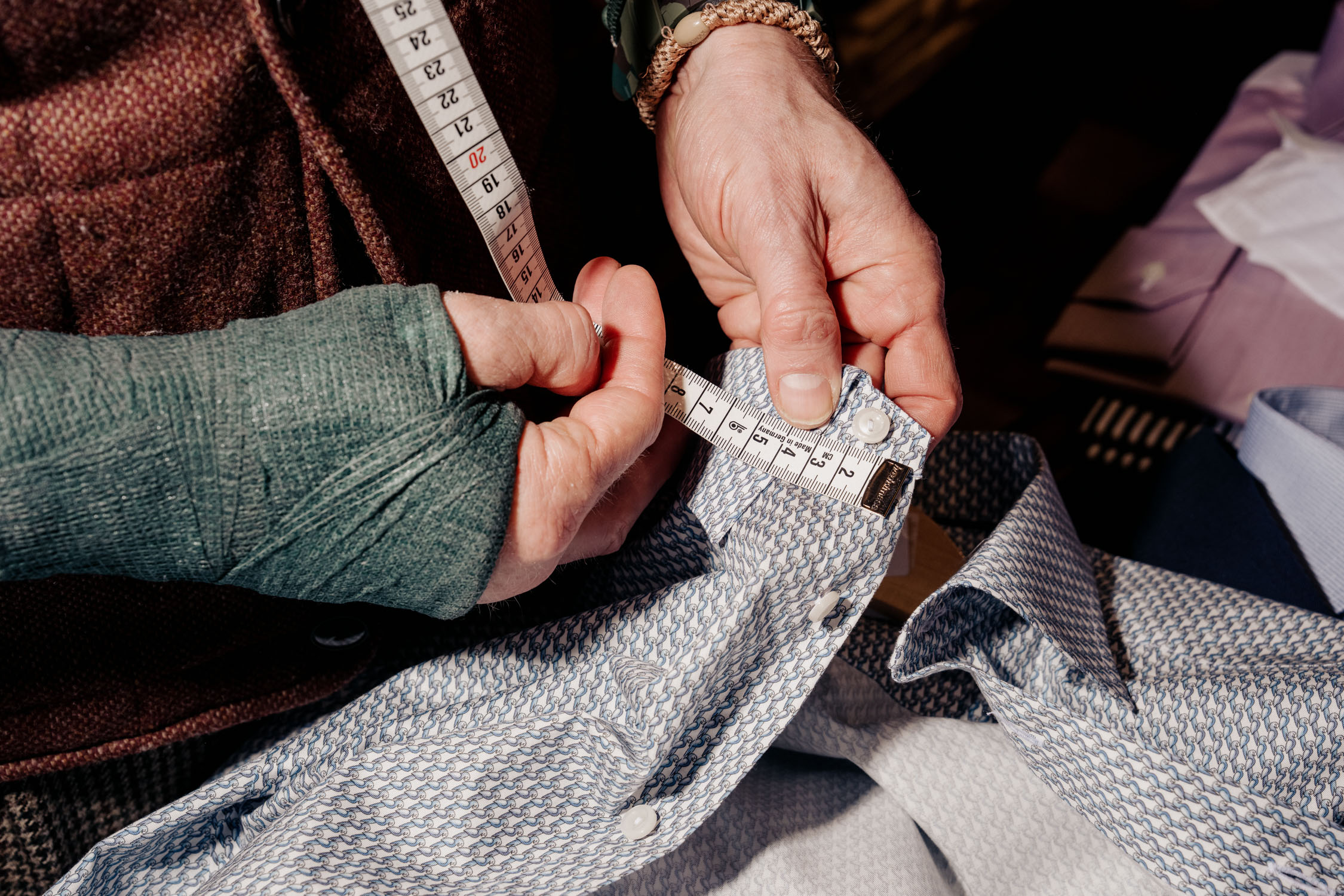
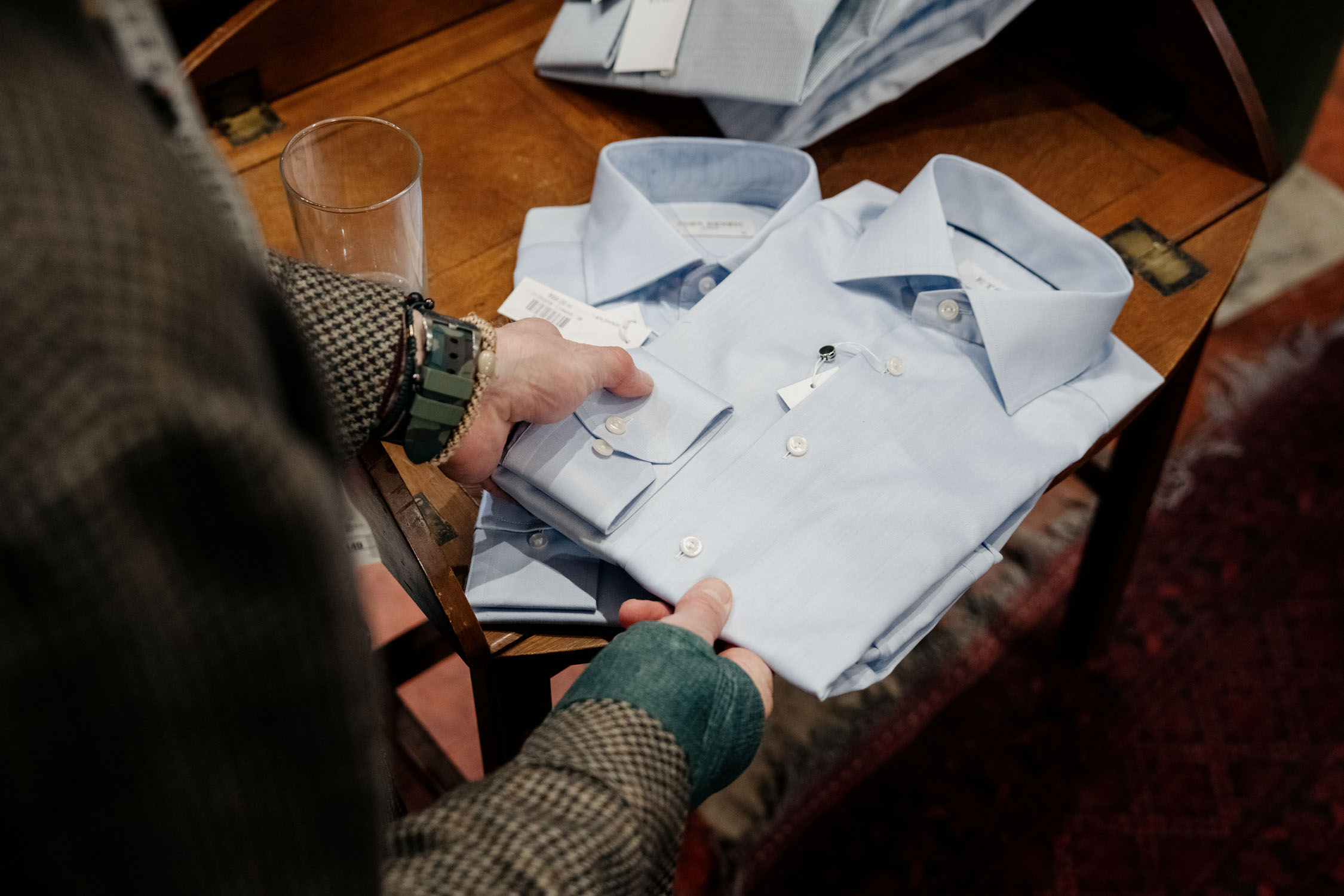
David Krarup fetches a glass of water, picks up four shirts – one white and three in different shades of blue – and places them on a small table.
“A blue shirt is terribly impractical. The tiniest drop shows. I don't call it water, I call it heat. "If you give a presentation in a blue shirt, it'll quickly show," he says, dipping his fingers into the water and letting a drop fall onto each of the shirts.
The effect is striking: On the blue shirts, the water is extremely visible; on the white one not so much. Yet the colour blue has been fully embraced by the business environment. One explanation may be found in Denmark's history as a trading and maritime nation.
"Shipping companies were big business in the old days. People talk about blue waves and the blue Denmark, so maybe that's where the colour has slipped in," explains David Krarup.
Conservative Danish men
The blue shirt rarely works alone. It is almost always part of a suit, tie and smart shoes. A uniform signalling professionalism, but also conformity. Krarup's customers often describe their style as "conservative", even though they are more modern in other areas.
"I hear it all the time from people in the financial sector, and a 'conservative style in clothing' is in Denmark often interpreted as plain coloured. But that's a misunderstanding, because 'conservative' in the British sense is something completely different. It involves stripes, wide ties and plenty of colour. "The higher you advance in the financial sector in London, the more stripes you wear," he says, wondering why the development in Denmark has moved in the opposite direction.
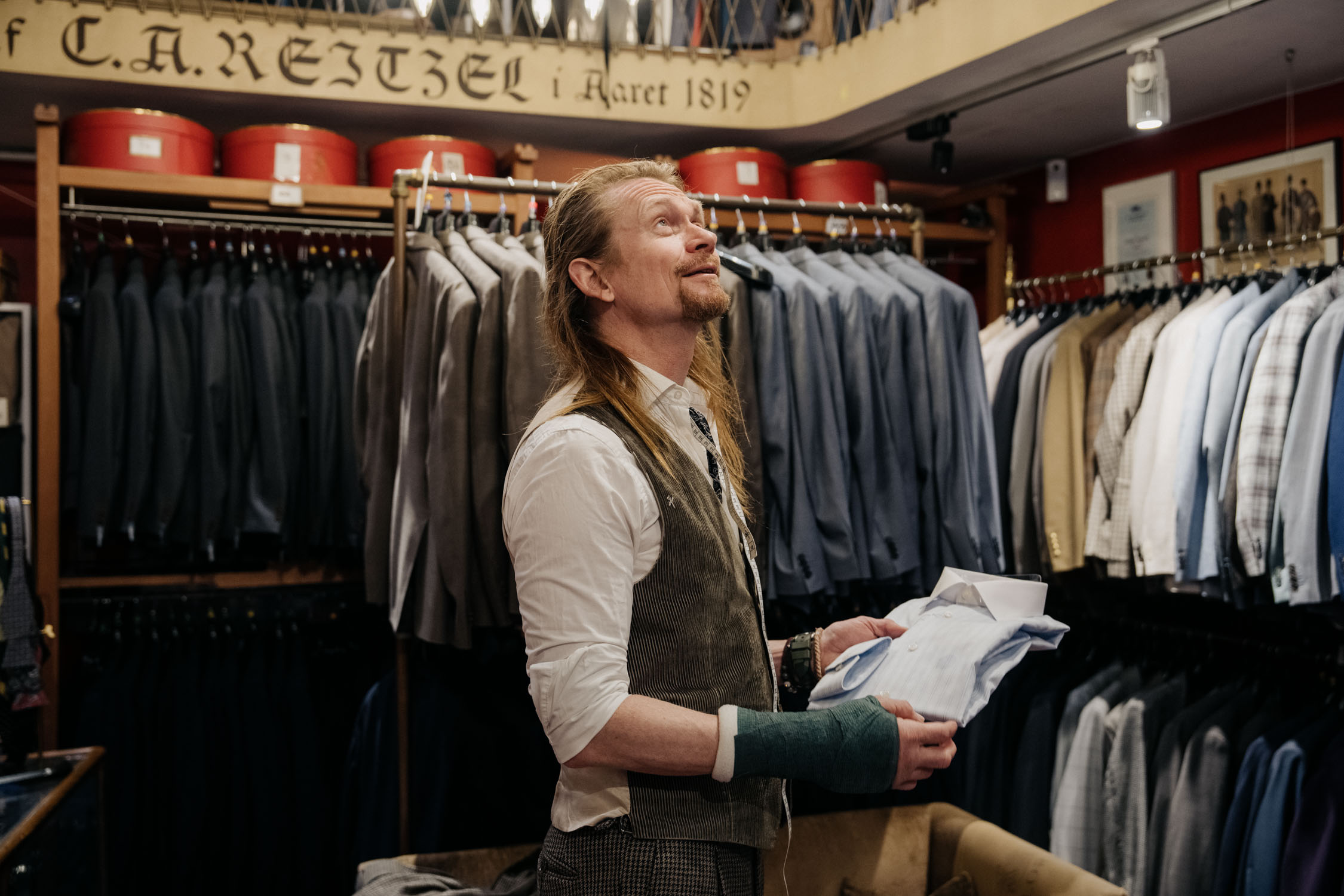
Throughout our nearly two-hour visit to the shop, he regularly shows alternative combinations of shirts and ties – and he even changes from his own checked suit and waistcoat to a blue one in the middle of the shop to show the possibilities.
"We’ve become a curiously colourless country; that development has completely passed us by," he remarks dryly.

When film and finance meet
Krarup explains that pop culture has also left its mark on the business shirt. A classic example is the so-called Wall Street shirt with stripes and a white collar – inspired by the financial world in films.
“That's the Gordon Gekko shirt,” Krarup says with a laugh, referring to the main character in the film Wall Street, where Michael Douglas plays the extremely greedy stockbroker Gordon Gekko who is often wearing a shirt with blue stripes and a white collar.
"It's the cynical face of the financial sector," says David Krarup and laughs as he brings up another film reference:
"It's a bit like American Psycho." If you find yourself with a finance professional who wears a white collar and starts talking about Whitney Houston, I'd probably leave the flat immediately."
The conservative Danish wardrobe
He circles back to the dull clothing of Danish men, because while many international business professionals use clothing to show status and personality, Danish men are far more conservative, according to Krarup.
"The Swedes are better at it, the Dutch are better at it, but we have, in fact, stagnated. It doesn't mean that Danish business professionals lack style – it just means that they rarely use it. If I worked in the financial sector, I wouldn't be the least bit apprehensive about wearing a shirt with a little colour," he says.
At Herrernes Magasin, that philosophy is part of the business. Krarup wants to "show men the potential and not just the blue, plain coloured and conservative", but in the real world he knows that the dark suit and blue shirt uniform is unlikely to disappear anytime soon.
"The suit and blue shirt still have a function; they signal a sense of belonging. But we do see the stripes making a comeback, so perhaps this particular variation will break with the Danish business uniform. Because even in the world of finance, there's room for more than just another blue shirt," indicates David Krarup.
