




Maja was struck by chronic illness: I am grateful that I still have my job
When union representative Maja B. Enggaard at age 33 was struck by a chronic illness, it was important for her that she could keep her job as a retail client adviser. She experienced a bank full of support and now works 12 hours a week.
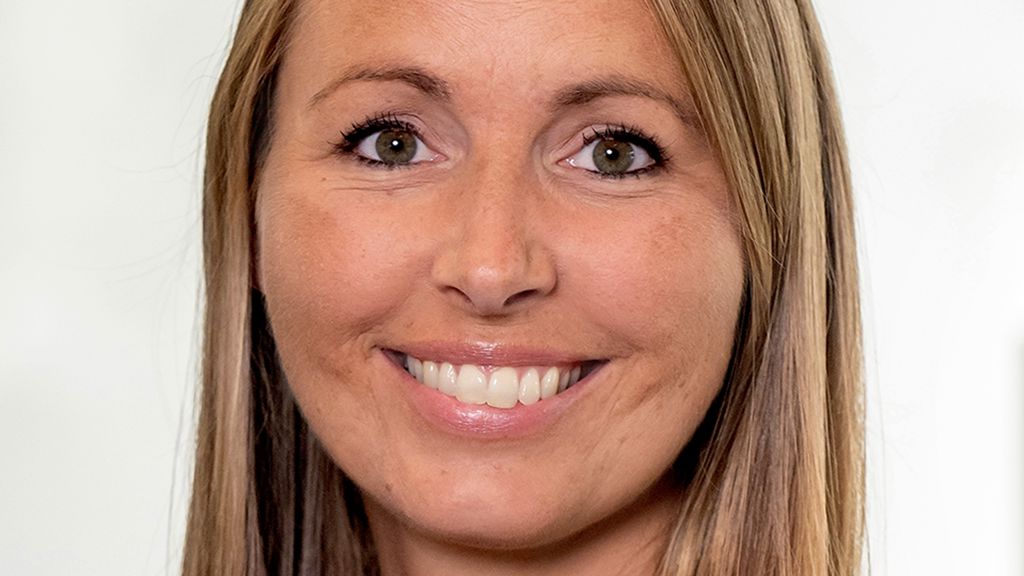
Her body was aching here and there, but Maja B. Enggaard from Sydbank’s branch in Billund was sure she knew the cause.
“I was training for a half marathon in 2020, so I did a lot of running. That’s why I assumed for a long time that the pain was due to repetitive strain.”
After fruitless visits to the physiotherapist following persisting pain, she used her health insurance for an MR scan at Privathospitalet Mølholm.
Here, the doctors identified inflammation that had nothing to do with her running routine.
She was later assessed in the public health system and diagnosed with ankylosing spondylitis (a chronic condition affecting mainly the spine).
“Up to this point, I had been hoping that it would be something treatable that would pass, so everything could go back to normal.”
This is a chronic condition that was not caused by running but happened coincidentally while training.” The condition’s progression and pain level may vary significantly from person to person.
After having undergone a series of tests and tried out various medical treatments, Maja B. Enggaard had to accept that she would not be able to work full-time anymore.
She also had to give up working as a union representative, a role she was very pleased with.
“Every time I tried a new treatment, I obviously hoped it would make a difference. It was always my hope and greatest wish to be back on the job full-time. But at some point, you’ll have to accept that this is your baseline now – without giving up hope,” says the now 37-year-old retail client adviser, who was on part-time sick leave for two and a half years.
12 hours a week
Since January 2024, she has been employed in a flex job scheme that Finansforbundet’s Sydbank branch helped negotiate for her.
She now works 12 hours a week: generally, two days in the morning and two days in the afternoon.
“If needed for the sake of customers or colleagues, I try to be as flexible as possible. I think it works well.”
Her condition means she has pain and gets tired. She also spends a lot of time on hospital visits and blood tests, because it is important to monitor the condition and keep the body strong and mobile. She therefore trains with a physiotherapist twice a week.
Importantly, she must preserve energy to function in her personal life – she has a husband and two children aged 11 and 13.
“Fortunately, they are big enough to understand that I have this condition. If there’s been any positive outcome at all, it would be that I spend more time at home with them – even though I still need to rest more.”
The importance of work
The retail client adviser is currently in the process of sorting through clients to assign some of them to a trainee.
“I am keeping the clients that have specifically asked that I continue with them and those that give me some degree of variation and meaning in relation to making broad use of my skills.”
It means a lot to Maja that she can apply herself professionally.
“Work is an important part of my identity, and being something other than sick and tired is important.”
On the one hand, she experiences grief over her inability to pursue the ambitions she had in her job and her role as a union representative:
“But on the other hand, I am very grateful for having the opportunity to keep my job. The input I get and the social and professional benefits of meeting colleagues and clients are also very important in my daily life.”
Showing the will to work
In her experience, the bank in general, her manager, colleagues and Finansforbundet’s Sydbank branch have been very supportive, showing their understanding and being attentive to her needs and situation.
“When you find yourself in a life-changing situation, it’s crucial that you can hang on to something you know – and that you don’t also have to fight workwise. I didn’t have to; I felt everyone wanted what’s best for me. That said, I’ve also fought to clearly show that I still want my job.”
More flex jobs
Maja B. Enggaard is one of relatively few employees in flex jobs in the financial sector, a situation that Finansforbundet is working to improve. She is backing this by sharing her story:
“It can easily be done; it’s not all that different from having a part-time employee,” she says, being consciously committed to living in the moment and not dwelling too much on concerns about her future working life and how long it will last.
“What I take note of is how I feel today now that I thrive in my job, and it works in my department. I’ve been very open about my condition, and while the necessary precautions are taken, it’s not an everyday focus.”
Openness and patience
The retail client adviser encourages anyone in a similar situation to answer questions from colleagues and to make sure that there are no taboos about why you work only a few hours.
A great deal of patience is also needed as securing a flex job is a lengthy process, even if this is what the workplace wants. But in her opinion it is worth fighting for:
“If, for whatever reason, you’re incapable of working full-time even though you want to, it may be extremely hard to accept– but since it cannot be changed, it makes a big difference that you can still apply your skills, that you can contribute and be part of the community.”